For Health Systems
Your high-risk moms, booked and seen after discharge.
Naomi picks up where discharge ends. She books the blood pressure check, gets mom there, and rebooks until she's seen, so fewer moms come back through your emergency department.
The problem
What goes wrong after discharge
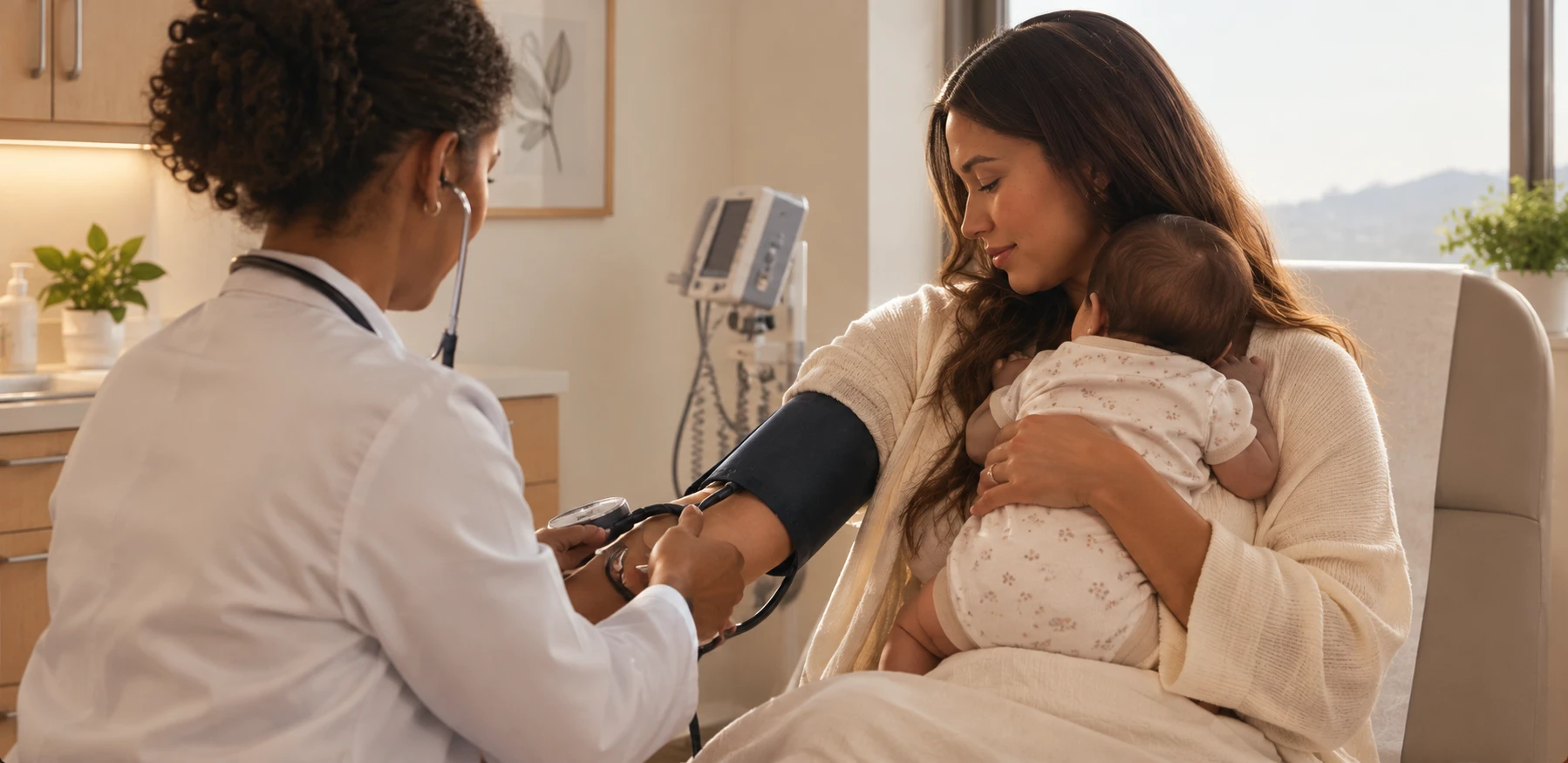
Moms with gestational hypertension or preeclampsia need a BP check within 7 to 10 days of delivery. Blood pressure peaks 3 to 6 days after birth, when most moms are already home, and many never make that visit.
Postpartum blood pressure readmissions doubled between 2010 and 2019. Each one is avoidable cost and a bed you needed for someone else.
Why now
The clock is already running
On January 1, 2027, the global OB billing package goes away. Postpartum visits become separately billed visits. A visit that happens is revenue. A visit that's missed is lost.
How it works
Naomi does the work, not just the reminder
- 1
Enroll at discharge.
A nurse shares a text link or QR code. No app, no login for mom.
- 2
Naomi does the work.
She contacts the clinic, books the BP check and postpartum visit, puts them on mom's calendar, sorts out coverage and getting there, and sends reminders.
- 3
She rebooks if mom misses.
A no-show isn't the end. Naomi reaches out and books again.
- 4
Anything clinical goes to your team.
Naomi never gives medical advice. Symptoms and concerns go straight to the care team you name.
What you get
Visits kept, and the proof
Fewer BP readmissions
Moms who reach their BP check early are caught before a crisis
Billable postpartum visits
Under the 2027 codes, every completed visit is a visit you can bill
Nurse time back
Booking calls, reminders and coverage questions come off your team's list
One view of every mom
Booked, attended or needs attention, with a record of every outreach
The offer
We're choosing two health systems as design partners. About 25 high-risk moms over 90 days, at no cost. You get visit completion data for every mom, and a 30-minute check-in every two weeks to review it.
Contact
Talk to us.
Tell us about your postpartum population and how follow-up works today.